Drug Addiction Treatment Services Available at Recreate Ohio
Drug addiction treatment works best when it is not treated as a single appointment, a single level of care, or a single clinical method. People rarely arrive with one neat problem. A person may be dealing with opioid use, stimulant use, alcohol use, anxiety, depression, trauma, family strain, legal pressure, chronic pain, or the practical fear of stepping away from work and home long enough to get well. Good treatment has to meet that complexity without making the person feel reduced to a diagnosis.
Recreate Ohio, also known as Recreate Behavioral Health of Ohio, is located in Gahanna, just outside Columbus. The facility is part of Recreate Behavioral Health Network and offers drug addiction treatment through several levels of care, including detox, residential or inpatient rehab, and outpatient treatment. Recreate describes its Ohio program as providing a full continuum of care, which matters because recovery needs can change over time. Someone may begin in detox, move into residential treatment, and later continue with outpatient support. Another person may not need the same sequence, but may still benefit from therapy, medication support, and structured recovery planning.
Ohio’s treatment landscape is built around that same idea of a continuum. State law calls for community-based care for opioid and co-occurring drug addiction that includes detoxification, outpatient treatment, medication-assisted treatment, peer support, residential services, recovery housing, and multiple pathways to recovery. Providers that deliver substance use disorder treatment in Ohio must also be certified by the Ohio Department of Mental Health and Addiction Services under state law. For families searching under pressure, those details are not just administrative. They help frame what responsible treatment should look like: coordinated, clinically grounded, and able to respond to more than one stage of recovery.
Why a continuum of care matters in drug addiction treatment
Many people first ask for help at a crisis point. A parent finds pills. A spouse discovers relapse after months of suspicion. A person wakes up after another frightening night and realizes withdrawal is no longer something they can manage alone. At that moment, the goal often sounds simple: stop using. Clinically, though, stopping is only the first step.
Drug addiction affects the body, memory, decision-making, sleep, emotional regulation, relationships, and daily structure. Once substances leave the body, the reasons a person kept returning to them often remain. Cravings can appear when stress spikes. Old contacts can pull someone back into use. Depression can deepen after the chemical chaos settles. A person may sincerely want recovery and still feel ambushed by the first ordinary conflict at home.
That is why a continuum of care is so important. Detox can help someone through the early medical and physical stage. Residential treatment can provide a protected environment where therapy and stabilization take priority. Outpatient care can help the person practice recovery while returning to real-life responsibilities. Medication-assisted treatment may reduce cravings and support stability for certain substance use disorders, particularly opioid use disorder. Peer support and family involvement can strengthen the social side of recovery, where many relapses either start or are prevented.
Recreate Ohio’s stated services fit within this broader model. The facility offers detox, residential or inpatient rehab, and outpatient treatment, and may include medication-assisted treatment, evidence-based therapies, family and couples therapy, and holistic supports. The value is not that every person receives every service. The value is that several tools are available, so care can be shaped around clinical need rather than forcing everyone through the same narrow door.
Detox at Recreate Ohio
Detox is often the first level of care people think about when drug addiction has become physically dangerous or impossible to interrupt. Withdrawal can be uncomfortable, unpredictable, and in some cases medically risky. Even when withdrawal is not life-threatening, the fear of it Addiction Treatment in Ohio keeps many people using long best addiction treatment Ohio after they want to stop. A person may tell themselves they are choosing the drug, when in reality they are choosing not to be sick.
Recreate Ohio offers detox as part of its treatment services. In a treatment continuum, detox is designed to help a person begin the process of clearing substances from the body while receiving clinical support. The exact detox experience can vary depending on the substances involved, the person’s health history, length and intensity of use, and whether co-occurring mental health symptoms are present.
It is important to understand what detox can and cannot do. Detox can help stabilize the body and create a safer starting point for treatment. It can provide monitoring, support, and a structured environment during a vulnerable period. But detox by itself is not the same thing as recovery. In practice, the days immediately after detox can be some of the most delicate. Tolerance may drop. Cravings may persist. Emotions may return sharply. Without the next step, a person can be physically substance-free but still unprepared for the triggers that contributed to use in the first place.
That is why the transition from detox into ongoing treatment matters. When detox connects directly to residential care or outpatient services, there is less room for the person to drift back into the same environment without support. Families sometimes underestimate this gap. They may breathe a sigh of relief once the person has “gotten clean,” but the clinical work is just beginning. The best time to build momentum is often right after detox, when the person has already taken a hard first step and can begin addressing the patterns underneath the substance use.
Residential and inpatient rehab in Gahanna
Recreate Ohio offers residential or inpatient rehab at its Gahanna location. Residential treatment gives people a structured setting where recovery becomes the main focus of the day rather than something squeezed between work, conflict, cravings, and exposure to old triggers. For many people, that separation is not avoidance. It is stabilization.
The early stage of recovery can be noisy. Sleep may be irregular. Appetite may change. Anxiety can surge. Some people feel emotionally numb for a while, then suddenly overwhelmed. Others become highly motivated for a week, then hit a wall when shame or boredom sets in. Residential care can help create a container for that process. Instead of trying to manage everything alone, the person is surrounded by clinical programming, therapy, routine, and support.
Recreate says its Ohio facility provides primary mental health services in a residential treatment setting. That is notable because drug addiction and mental health symptoms often overlap. Substance use may begin as a way to quiet panic, trauma memories, depression, social anxiety, or mood swings. Over time, the substances worsen the same symptoms they once seemed to relieve. Treating addiction without addressing mental health can leave a person vulnerable. Treating mental health without addressing substance use can also fall short, because ongoing use can interfere with mood stability, sleep, judgment, and therapy progress.
Residential treatment can also give clinicians time to observe patterns that may not be obvious in a single assessment. How does the person handle conflict in group settings? What happens when family issues come up? Do cravings spike after shame, anger, loneliness, or boredom? Does the person minimize use, or are they painfully self-critical? These details help guide therapy and aftercare planning.
Not everyone needs residential care, and not everyone is able to step away from obligations for that level of treatment. That is where clinical assessment and honest conversation matter. The severity of use, withdrawal risk, relapse history, home environment, mental health symptoms, and daily safety concerns all influence the appropriate level of care. Still, for individuals who need a higher level of structure, residential rehab can provide the space to begin recovery with fewer outside distractions and more consistent support.
Outpatient treatment and the return to daily life
Recreate Ohio also offers outpatient treatment. Outpatient care can serve different purposes depending on where a person is in recovery. For some, it may be the first appropriate level of care. For others, it may follow detox or residential treatment as a step-down level of support.
The move back into ordinary life is often where recovery becomes real in a new way. In treatment, a person can learn coping skills, examine patterns, and build motivation. At home, they have to use those skills when a bill arrives, an argument starts, a friend texts, or a familiar route passes the place where they used to buy drugs. Outpatient treatment helps bridge that gap. It allows people to continue therapy and recovery work while navigating responsibilities outside the treatment setting.
This stage requires practical honesty. If someone returns to the same routine without changing anything, relapse risk can rise. Outpatient care can help the person plan for specific pressure points: evenings after work, weekends, family gatherings, paydays, pain flare-ups, grief anniversaries, or contact with people connected to past use. Recovery plans are strongest when they name real risks rather than relying on general promises.
Outpatient treatment can also support people who have family, school, or employment responsibilities that make residential care difficult. The trade-off is that the person has more exposure to daily triggers. That does not make outpatient care weaker, but it does mean the fit has to be right. Someone with unstable housing, severe withdrawal concerns, repeated immediate relapse, or acute mental health symptoms may need a more intensive setting first. Someone with a safer home environment and enough stability may do well in outpatient services, especially with consistent participation and family support.
Medication-assisted treatment
Recreate Ohio may include medication-assisted treatment as part of care. Medication-assisted treatment, often called MAT, combines approved medications with counseling and behavioral therapies for certain substance use disorders. It is most widely discussed in relation to opioid use disorder, where medication can reduce cravings, support stability, and lower the physiological pull that drives repeated use.
There is still stigma around MAT. Some families worry it means replacing one substance with another. Some people in recovery have heard conflicting opinions from peers or past programs. Clinically, the better question is not whether medication is “good” or “bad” in the abstract. The question is whether it is appropriate for the person’s diagnosis, risks, history, and recovery goals, and whether it is delivered with proper medical oversight and therapeutic support.
For opioid addiction especially, cravings and withdrawal are not merely matters of willpower. The brain and body adapt to repeated opioid exposure. After use stops, people may struggle with powerful physical and emotional distress. MAT can be one tool to improve retention in treatment and reduce the cycle of relapse. It does not replace therapy, accountability, or lifestyle change. It can, however, give some people enough stability to participate more fully in those parts of treatment.
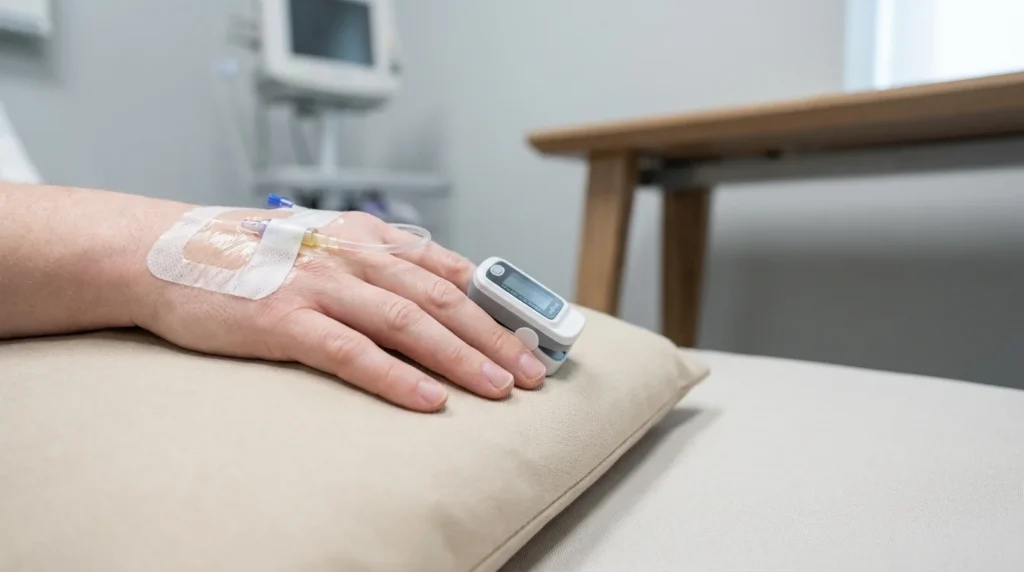
Ohio also uses OARRS, the state’s electronic database for controlled-substance dispensing information. OARRS supports safe prescribing and helps connect people at risk of substance use disorder to resources. In a clinical setting, responsible medication decisions require attention to safety, history, and coordination. For individuals with drug addiction, that kind of oversight is not a formality. It can be part of protecting recovery.
Evidence-based therapy at Recreate Ohio
Recreate states that treatment at the Ohio facility may include cognitive behavioral therapy, dialectical behavior therapy, EMDR, individual therapy, group therapy, family therapy, and couples therapy. Each therapy has a different role, and the right mix depends on the person.
Cognitive behavioral therapy, or CBT, helps people identify the thoughts, assumptions, and behaviors that keep substance use active. A person might believe, “I already ruined the day, so it does not matter,” or “I cannot handle this feeling unless I use.” CBT helps challenge those patterns and replace them with more useful responses. It tends to be practical, skill-based, and especially helpful for relapse prevention.
Dialectical behavior therapy, or DBT, is often associated with emotional regulation, distress tolerance, mindfulness, and relationship skills. Many people with drug addiction do not only struggle with cravings. They struggle with the feeling that emotions become unbearable. DBT skills can help someone get through intense moments without acting on the first impulse.
EMDR, which stands for eye movement desensitization and reprocessing, is commonly used in trauma treatment. Recreate indicates EMDR may be part of treatment at the Ohio facility. Trauma and addiction often become intertwined. A person may use substances to numb memories, reduce hypervigilance, or escape shame. If trauma remains untreated, sobriety can feel emotionally unsafe. Trauma-focused therapy has to be paced carefully, especially early in recovery, but for the right person at the right time, it can be an important part of healing.
Individual therapy gives space for private work that may not be ready for a group setting. Group therapy offers something different: recognition. People often arrive believing their story is uniquely shameful. In a well-run group, they hear versions of their own fears spoken by others. That does not erase accountability, but it reduces isolation. Family and couples therapy can address the relational damage addiction often leaves behind. Trust may be thin. Communication may have become a cycle of accusation, denial, checking, hiding, and emotional exhaustion. Therapy can help families move from crisis reactions toward clearer boundaries and more productive support.
What treatment may include
Recreate Ohio’s services may combine clinical, relational, medication, and holistic elements. The mix should be based on clinical need rather than preference alone, because effective drug addiction treatment has to address both immediate safety and long-term recovery skills.
The following services are among those Recreate says may be available at its Ohio facility:
- Detox and residential or inpatient rehab for people who need a structured start to recovery.
- Outpatient treatment for ongoing care while living outside the treatment setting.
- Medication-assisted treatment when clinically appropriate.
- CBT, DBT, EMDR, individual therapy, group therapy, family therapy, and couples therapy.
- Holistic supports such as yoga or mindfulness, art therapy, adventure therapy, equine therapy, Reiki, acupuncture, chiropractic care, fitness and wellness activities, and nutrition education.
That range matters because people engage in recovery differently. One person may do their deepest work in individual therapy. Another may begin to open up in group after hearing someone else describe the same pattern of relapse. Someone with trauma may need careful, specialized therapy. Someone whose body has been depleted by months or years of substance use may benefit from basic wellness routines, nutrition education, and movement. The point is not to turn treatment into a menu of unrelated activities. The point is to support the whole person while keeping the clinical work at the center.
Holistic supports without losing the clinical focus
Holistic services can be valuable when they complement, rather than replace, clinical treatment. Recreate says its Ohio facility may provide supports such as yoga and mindfulness, art therapy, adventure therapy, equine therapy, Reiki, acupuncture, chiropractic care, fitness and wellness activities, and nutrition education. These services can help people reconnect with their bodies, practice calm, build confidence, and experience healthy forms of relief.
The phrase “holistic” can mean different things in different settings, so it is worth being precise. A person recovering from drug addiction often needs medical assessment, therapy, relapse prevention planning, and sometimes medication. Yoga or art therapy does not take the place of those services. What it can do is help the person tolerate discomfort, express what is difficult to say directly, or discover that they can feel present without using substances.
Fitness and nutrition education can also be more practical than they sound. Addiction often disrupts sleep, meals, hydration, dental health, movement, and basic daily care. Early recovery is not only about insight. It is also about rebuilding a life rhythm that supports the nervous system. Regular meals, improved sleep habits, and manageable physical activity can make emotional regulation easier. They are not cures, but they reduce unnecessary strain.
Mindfulness can be especially useful for cravings. A craving usually feels like a command, but it rises, peaks, and falls. Learning to observe that process without immediately obeying it is a skill. Many people need repeated practice before they believe it works. In a treatment setting, mindfulness can be introduced in a way that feels grounded and accessible rather than abstract.
Treating co-occurring mental health needs
Recreate states that its Ohio facility offers primary mental health services in a residential treatment setting. For many individuals and families, this may be one of the most important features to ask about during the admissions process.
Co-occurring conditions are common in addiction treatment. Depression can drain motivation and make relapse feel inevitable. Anxiety can make ordinary responsibilities feel threatening. Trauma can keep the body in a constant state of alarm. Mood instability can complicate sleep, relationships, and decision-making. Substance use can temporarily mask these symptoms, then intensify them over time.
The sequencing of care requires judgment. If someone is actively withdrawing or medically unstable, stabilization comes first. If someone is too emotionally flooded, trauma processing may need to wait until coping skills are stronger. If someone’s substance use is worsening psychiatric symptoms, both issues need to be addressed in a coordinated way. Good treatment does not rush every topic at once. It prioritizes safety, readiness, and steady progress.
Families sometimes ask whether addiction caused the mental health symptoms or the mental health symptoms caused the addiction. The answer is often “both,” or at least “they now affect each other.” Treatment does not always need a perfect origin story to begin. It needs a clear plan for reducing harm, improving stability, and helping the person build a life where substances are no longer the main coping tool.
Family and couples therapy in addiction recovery
Addiction rarely stays contained within one person. Families adapt around it, often without realizing how much their lives have narrowed. A partner may become hypervigilant, checking phones, money, pupils, sleep, and tone of voice. Parents may swing between rescue and anger. Adult children may stop believing apologies. The person with addiction may carry shame and defensiveness in equal measure.
Recreate Ohio may include family and couples therapy as part of treatment. These services can help repair communication, clarify boundaries, and reduce patterns that keep everyone stuck. Family therapy is not about blaming relatives for addiction. It is about recognizing that recovery happens inside relationships, and relationships need guidance after repeated hurt.
A common family pattern is the demand for immediate trust. The person in treatment may say, “I am doing better, why do you keep bringing up the past?” The family may respond, “Because we have heard this before.” Both sides may be telling the truth. Trust is not restored by one promise or one week of progress. It grows through consistent behavior, transparency, and time. Therapy can help families set realistic expectations so early recovery is not crushed under either suspicion or overconfidence.
Couples therapy can be especially delicate. Substance use may have been tied to secrecy, financial strain, intimacy problems, emotional distance, or conflict. Therapy can help partners talk about these issues without turning every conversation into a courtroom. Sometimes the work is reconciliation. Sometimes it is boundary-setting. Sometimes it is learning how to support recovery without making one partner responsible for controlling the other’s sobriety.
Questions to ask before beginning care
Choosing drug addiction treatment often happens quickly, but a few direct questions can help families understand whether a program fits the person’s needs. Recreate Ohio identifies detox, residential or inpatient rehab, outpatient treatment, medication-assisted treatment, multiple therapies, primary mental health services in residential care, and holistic supports as part of what may be available. The next step is making sure the recommended care matches the individual situation.
Helpful questions include:
- Which level of care is being recommended, and why?
- How are co-occurring mental health symptoms assessed and treated?
- When is medication-assisted treatment considered appropriate?
- How does the program involve family or partners when clinically useful?
- What does the transition from detox or residential care into outpatient support look like?
The answers should be specific enough to make sense. A person with opioid addiction and repeated relapse may need a different plan than someone with a shorter period of stimulant use and strong home support. Someone with trauma symptoms may need a different therapy pace than someone whose main challenge is social pressure and impulsivity. Good treatment planning should account for those differences.
The role of location and accessibility
Recreate Ohio is in Gahanna, just outside Columbus. Location can matter more than people expect. For some families, being near Columbus may make it easier to coordinate admissions, family involvement, and step-down care. For others, distance from home may provide needed separation from triggers. There is no universal answer. The right distance depends on the person’s safety, family dynamics, responsibilities, and recovery plan.
Accessibility also includes emotional access. People entering treatment may feel embarrassed, angry, frightened, or ambivalent. They may agree to treatment in the morning and want to back out by evening. Families should expect some uncertainty. Ambivalence is common in addiction recovery, especially at the beginning. The presence of ambivalence does not mean treatment is pointless. It means the treatment team needs to help the person move from crisis motivation toward deeper, more durable reasons for change.
A facility offering multiple levels of care can reduce some friction in that process. If a person starts in detox and needs residential treatment afterward, continuity can help. If they complete residential care and still need ongoing support, outpatient treatment can extend the work. Recovery is easier to sustain when transitions are planned rather than improvised.
Multiple pathways to recovery
Ohio’s approach to addiction care recognizes multiple pathways to recovery. That phrase is important. People recover through different combinations of clinical treatment, medication, peer support, family repair, spiritual practices, community support, lifestyle change, and time. The path that works for one person may not be the right fit for another.
Professional treatment should not flatten those differences. Some people respond strongly to structured therapy and skills practice. Others need peer connection to believe recovery is possible. Some need medication support to stabilize opioid cravings. Some need trauma treatment before they can stop returning to substances for relief. Some need help rebuilding the ordinary structure of life: meals, sleep, work, movement, honest relationships, and a reason to get through the hard days.
Recreate Ohio’s stated continuum, including detox, residential or inpatient rehab, outpatient treatment, therapy options, medication-assisted treatment, mental health services, family and couples work, and holistic supports, reflects that broader understanding. The strongest recovery plans are not built around slogans. They are built around careful assessment, appropriate care intensity, and steady adjustment as the person changes.
When treatment becomes more than stopping drugs
The phrase “drug addiction treatment” can sound clinical and narrow, but the work itself is deeply human. It involves telling the truth after months or years of hiding. It involves sitting through cravings that feel urgent and emotions that feel unfamiliar. It involves learning how to apologize without collapsing into shame, and how to accept support without using it as a shield from responsibility.
For families, treatment can mark the first time in a long while that the crisis is not being managed alone. For the person entering care, it can be the first time their addiction is treated as serious but not hopeless. That balance matters. Drug addiction is dangerous, and relapse can carry real consequences. At the same time, people do recover, especially when care is matched to their needs and continued long enough to support real change.
Recreate Ohio offers several drug addiction treatment services in Gahanna, including detox, residential or inpatient rehab, and outpatient treatment. The facility may also include medication-assisted treatment, CBT, DBT, EMDR, individual therapy, group therapy, family therapy, couples therapy, primary mental health services in a residential setting, and a range of holistic supports. For someone seeking help near Columbus, those services represent more than program features. They represent possible entry points into a longer process of stabilization, healing, and rebuilding.
The most important step is often the one that moves treatment from an idea to an actual conversation. A careful assessment can clarify what level of care fits, what risks need attention, and what supports should be in place after the first phase ends. Recovery does not need to be solved all at once. It needs to begin with the right help, at the right level, with enough continuity to carry the person beyond the crisis and into a life that can hold.